Three Grands Prix. Three nightmare weekends. A crash in qualifying, a retirement in the race, a 7th place stuck behind an Alpine. That is Max Verstappen's record since the start of the 2026 season. The four-time world champion, used to dominating the grid, is discovering what it means to suffer with a car that no longer responds. And he is not mincing his words. Discover our exclusive F1 collection to celebrate every moment of this extraordinary season.
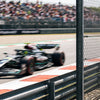
One image perfectly sums up Max Verstappen's start to the 2026 season. Suzuka, Japanese Grand Prix, closing laps. The Dutchman has been glued to the exhausts of Pierre Gasly's Alpine for dozens of laps. He is faster per lap. He wants to pass. But every time he tries on the straights, his battery is empty. The Red Bull RB22 runs out of steam at the precise moment he needs it most.
For a driver who dominated four consecutive championships with disconcerting ease, finding himself trapped behind an Alpine is an image nobody had anticipated. And yet that is the reality of the 2026 season for Red Bull and its number one driver.
🇦🇺
Australian GP
P6
Crash in Q1, started 20th, climbed back to 6th place
🇨🇳
Chinese GP
DNF
Retired from the race with a cooling failure, out in sprint Q2
🇯🇵
Japanese GP
P7
Out in Q2, stuck behind Gasly in the race despite superior pace
Three GPs, three ordeals: the story of an impossible season start
Australia: the crash that set the tone
Melbourne, Q1 qualifying. Max Verstappen brakes for the first corner, locks his rear wheels, spins and ends up kissing the Tecpro barriers. The Red Bull is destroyed. The four-time world champion lines up 20th on the grid for the Australian Grand Prix.
What follows is both impressive and revealing. Verstappen climbs from 20th to 6th over the course of the race, producing one of those spectacular comebacks that are his trademark. But that is where it ends, stuck behind Lando Norris, unable to go any further. The pace is simply not there. Starting from pole like Russell, Verstappen would not have had the tools to fight for the win.
China: rock bottom
The Chinese Grand Prix is Verstappen's toughest weekend in a very long time. Qualified eighth for the sprint race, 1.7 seconds off polesitter George Russell, the Dutchman sums up the situation himself with cold lucidity.
The whole day has been a disaster performance-wise. No grip. Honestly, I think that's the biggest problem: no grip, no balance, we lose a monstrous amount of time in the corners.
Max Verstappen, after qualifying for the 2026 Chinese GP
The race only makes things worse. Verstappen retires mid-race with a cooling failure. Red Bull acknowledges significant shortcomings across the whole package. Team principal Laurent Mekies admits that the RB22 has shown deep flaws, in terms of both reliability and outright performance.
Japan: the Suzuka ordeal
Knocked out in Q2 at Suzuka, Verstappen once again does his comeback job in the race. He passes his teammate Hadjar, breaks into the top 10, then gets stuck in the exhausts of Gasly's car for the rest of the race. The safety car offers him an opportunity, but it is not enough. He finishes 7th, furious but composed.
The problem is technical and clearly identified: every time he tries to overtake on a straight, the battery is empty. The new 2026 regulations, with their complex energy management, create a system in which overtaking uses so much electrical energy that you end up at a disadvantage on the next straight.
The start sickness: the technical problem dragging everything down
Behind the poor results lies a recurring problem running through the first three Grands Prix: Verstappen's disastrous starts. In Australia, he cites a lack of battery at the moment of releasing the clutch. In China, the same story. In Japan, a Q2 exit that rules him out of fighting for the front rows.
The start procedure under the new 2026 regulations is radically more complex than it used to be. The removal of the MGU-H forces drivers to rev the engine at very high RPM for at least ten seconds before the start to spool up the turbo. They must also make sure they have harvested enough energy on the lap to the grid to get good acceleration off the line.
Here the two problems were the same. I simply have no power. As soon as I release the clutch, the engine isn't there.
Max Verstappen, after the 2026 Chinese Grand Prix
This is not just a driving problem. It is a combination of energy management on the formation lap, start procedure and specific characteristics of the Red Bull Powertrains engine. The RB22 and its in-house engine, developed internally for the first time, are showing signs of inexperience in mastering these complex parameters.
-
Australia: start from the back of the grid after the Q1 crash, acceleration hampered by a lack of battery right from the start line.
-
China: retirement with a cooling failure, before even being able to test race pace in normal conditions.
-
Japan: Q2 with no chance of fighting for the front row, then unable to overtake in the race due to a lack of electrical energy at the key moment.
The motivation question: Verstappen on the edge of a psychological abyss
The poor results would be bearable if the driver's confidence remained intact. But what is more worrying around Verstappen at the start of the 2026 season is what he says outside the car. The Dutchman, usually sharp and direct, is letting unusual doubts about his future in the sport slip out.
Every morning, I remotivate myself and try to convince myself again. And I try. Red Bull keeps me going.
Max Verstappen, after the 2026 Japanese Grand Prix
These are striking words coming from a man who has won 71 Grands Prix and four consecutive world titles. Needing to "convince" yourself every morning to get in the car is not the vocabulary of a champion at the top of his game. It is that of a driver who is suffering.
F1 2026: a car Verstappen does not enjoy driving
The problem does not date from the start of the season. As early as pre-season testing, Verstappen had criticised the new 2026 regulations with disarming frankness. The increased electrical share, permanent energy management, modes that limit the driver's freedom: all of this deeply clashes with a driver who defines himself by instinct, mechanical feel and the ability to push a car beyond its limits.
For Verstappen, a Formula 1 that is not much fun to drive is a Formula 1 he could do without. And Red Bull, which knows its number one driver's psychology better than anyone, knows that the only possible answer to this crisis is a sporting one: give him a car capable of winning.
Red Bull: a team with its back to the wall
Laurent Mekies, Red Bull Racing team principal, acknowledges the difficulties with an honesty that stands out from the usual paddock talk. The five-week break between Suzuka and Miami is presented as an opportunity for intense work in Milton Keynes to understand the new package and fix the identified shortcomings.
But the challenge is immense. Red Bull designed its engine in-house for the first time in 2026, without the support of Honda, which now works with Aston Martin. Reliability and performance have to be built at the same time, in competition, against rivals like Mercedes, Ferrari and McLaren who are also pushing forward at full speed.
71
Verstappen's career wins
8th
Championship position after 3 GPs
20th
Starting position in Australia after the Q1 crash
Verstappen is not finished. But he needs a car
Formula 1 history is full of champions who went through dark periods before bouncing back stronger. Verstappen himself almost left Red Bull in 2024, before going on to become world champion for the fourth time. He knows what it is like to suffer and come back.
But 2026 is different. It is an entirely new set of regulations, a brand-new engine, a car that does not suit him yet. The April break is a chance for Red Bull to correct course before Miami. If the team comes back with an improved package, Verstappen will be back. He is too great to stay at the bottom of the standings for long. Explore the whole world of automotive passion at Tourismo Clothing.
Miami will be a test. For Red Bull. For the RB22. And for the motivation of a four-time champion who refuses to give up.
Frequently asked questions
Why is Verstappen performing so poorly in 2026?
Red Bull is having a difficult start to the 2026 season due to simultaneous shortcomings in the reliability and performance of the RB22. The new Red Bull Powertrains engine, developed in-house for the first time, suffers from energy management problems, particularly at starts and when overtaking in races. On top of that comes a general lack of pace compared with Mercedes, Ferrari and McLaren.
What are Verstappen's results in the first 3 GPs of 2026?
Australia: 6th after a crash in Q1 and a comeback from 20th place. China: retired from the race with a cooling failure. Japan: 7th after a Q2 elimination and a race stuck behind Gasly. That puts him 8th in the drivers' championship after three rounds.
Did Verstappen really mention a possible retirement in 2026?
Yes. After the Japanese Grand Prix, Verstappen confided that he had to remotivate himself every morning and convince himself to carry on. He admitted it was a "legitimate question" to wonder how far his motivation would go. These statements reflect deep frustration with the new 2026 regulations, which he does not find "fun to drive".
What is Verstappen's specific problem at starts in 2026?
The new 2026 regulations make start procedures much more complex. Drivers must manage the turbo and energy recovery on the lap to the grid very precisely. Verstappen has repeatedly cited a lack of power or battery at the exact moment of releasing the clutch, which costs him positions right from the start.
Can Red Bull recover before the end of the 2026 season?
Red Bull is using the forced April break, caused by the cancellation of the Bahrain and Saudi Arabian GPs, to work intensively in Milton Keynes on the identified shortcomings. Laurent Mekies has expressed confidence in the team's ability to progress. The Miami Grand Prix will be the first test of this hoped-for recovery.

 Français
 Português (Brasil)
 Deutsch
 Italiano
 Español