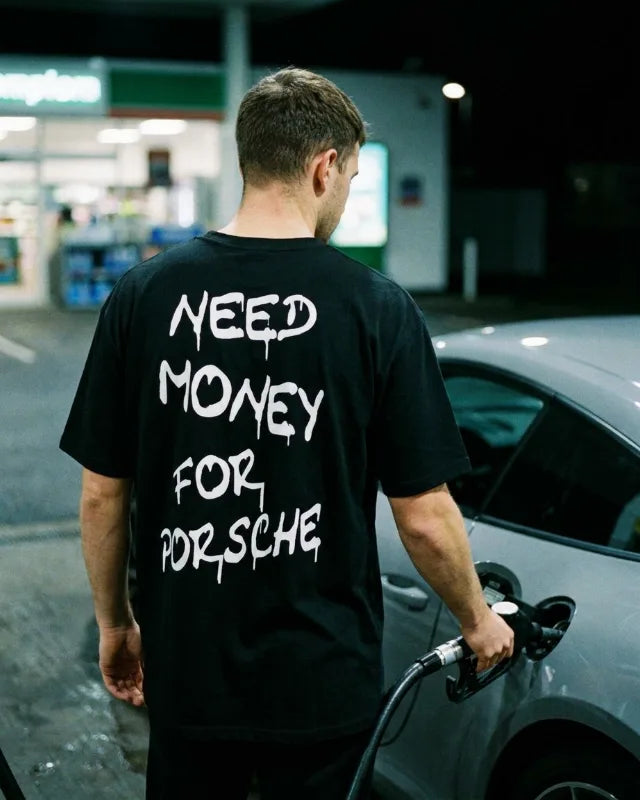
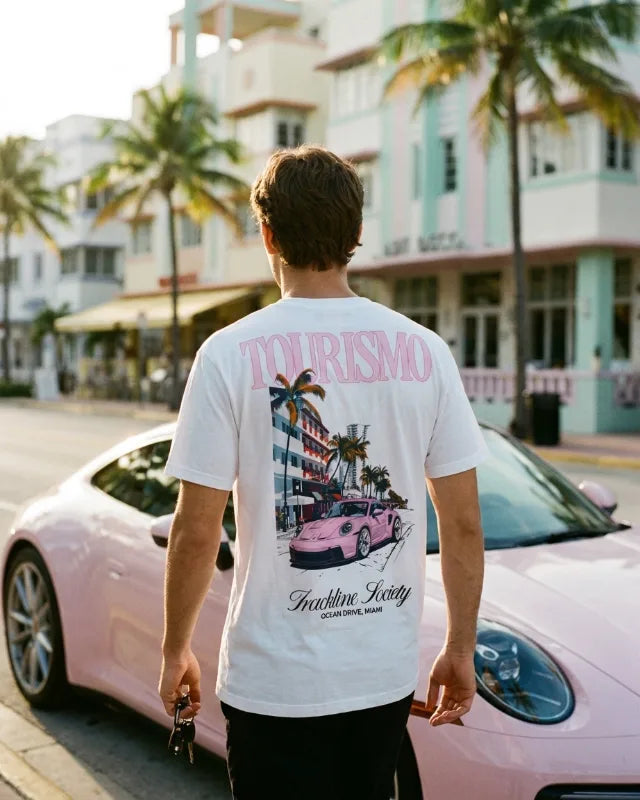
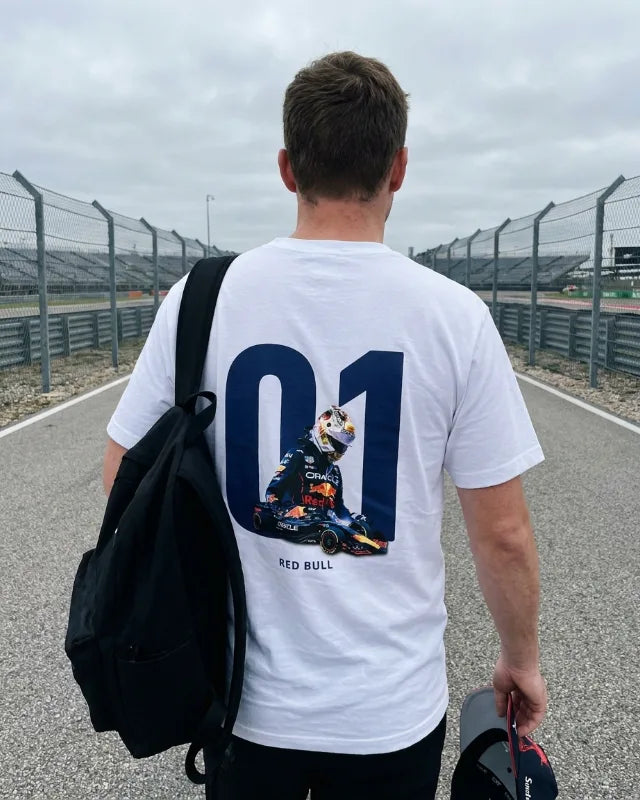
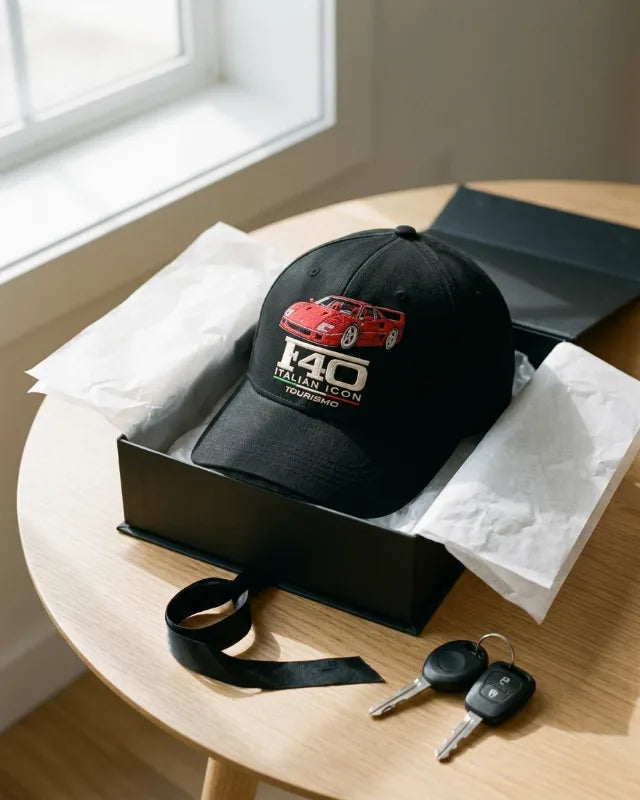
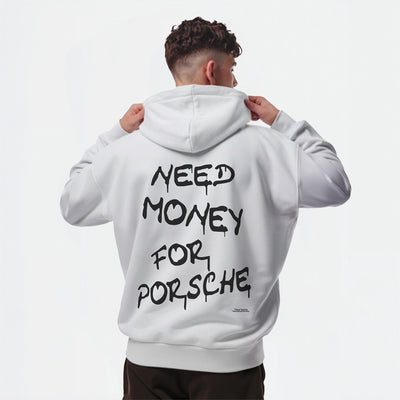
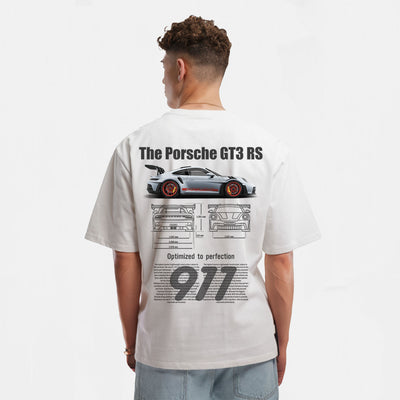
Japanese Domestic Market. Three words that sum up one of the most profound revolutions in automotive history. In the 1980s and 1990s, while Europe was building supercars for the wealthy and America still dreamed of its lost muscle car era, Japan was developing something entirely different: accessible, technically advanced, culturally charged sports cars capable of beating the best European machinery for half the price. A counter-culture born on the expressways of Wangan, on the mountain passes of Touge, in the arcades of Tokyo. A revolution that still belongs, thirty years later, to everyone who has a passion for cars in their blood. Explore this legacy in our Summer 2026 Collection from Tourismo Clothing.
Understanding JDM: far more than an acronym
JDM stands for "Japanese Domestic Market". Originally, the term simply referred to cars and parts designed specifically for sale in Japan, often with different specifications from exported models: more powerful engines, different equipment, legal limitations unique to the Japanese market.
Over time, however, the term took on a much broader dimension. JDM became a philosophy, a culture, a state of mind that celebrates performance, precision and the individual identity of the machine. A JDM owner does not simply buy a car. They understand it, modify it, personalise it until it becomes an extension of themselves. That is why JDM culture resembles art more than ordinary mechanics.
The origins: Japan on fire in the 1980s
To understand why JDM culture was born there and at that precise moment, you need to understand Japan in the 1980s. The country's economy was at the peak of its bubble: sudden wealth, massive urbanisation, a youth hungry for speed and freedom in a country where social constraints were otherwise very strong. Japanese manufacturers competed with each other at an intensity without precedent. Toyota, Nissan, Honda, Mazda, Mitsubishi: each wanted to build the fastest, most innovative, most desirable sports car.
In this context, something unexpected happened on the streets. A culture of illegal, dangerous and resolutely stylish street racing emerged from the major cities and mountain passes. The Japanese street driver is called the 走り屋 (hashiriya). They are not just looking for speed: they are looking for perfect lines, absolute mastery, an aesthetic of driving that official racing cannot give them. Four distinct tribes would form, each with their own roads, cars and codes.
The 4 tribes of JDM culture
🌃 Wangan · 湾岸
Tokyo Bay Expressway
The fastest. Wangan refers to the coastal expressway running along Tokyo Bay. At night, drivers would reach speeds above 300 km/h. This is the tribe of tuned GT-Rs and Supras built for pure speed. The manga Wangan Midnight is their bible.
🏔️ Touge · 峠
The Mountain Passes
The most technical. Touge refers to the winding mountain passes where drivers descend at high speed in darkness. This is the tribe of Initial D, Takumi Fujiwara's Toyota AE86, controlled drift and the perfect line on a road that forgives nothing.
💨 Drift · ドリフト
The Art of Controlled Slide
The most spectacular. Drift was born in Japan before becoming a global sport. Nissan S13, S14, S15 Silvia: these lightweight rear-wheel-drive cars became the weapon of choice for drifters. Keiichi Tsuchiya, the "Drift King", transformed this illegal practice into a recognised discipline.
⚡ Zero-yon · ゼロヨン
Japanese Drag Racing
The most direct. Zero-yon (0 to 400 metres, the quarter mile) pits cars prepared for pure acceleration against each other. This is where GT-Rs confirmed their "Godzilla" status by crushing far more expensive European sports cars.
1989
Launch of the Nissan Skyline GT-R R32 · Godzilla was born
276 hp
Official limit from Japanese manufacturers · The Gentleman's Agreement
1998
First broadcast of Initial D · Beginning of JDM's global conquest
The 5 cars that made JDM
-
The GT-R is the car that commanded respect from the entire world. Launched in 1989, the R32 arrived in motorsport and devoured everything: 29 consecutive victories in the Japanese Touring Car Championship, 46 wins from 46 starts in Australian Group A. Competitors demanded its ban. Journalists called it "Godzilla". The nickname stuck. The secret: an RB26DETT twin-turbo 2.6-litre engine coupled with an ATTESA E-TS all-wheel-drive system that distributed torque in real time to all four wheels. Officially limited to 276 hp by the Gentleman's Agreement between Japanese manufacturers, it produced considerably more in reality. The 1999 R34, with its aggressive aerodynamics and Nismo GT-R V-Spec II, became one of the most collected and most expensive cars on the global market.
RB26DETT · 2,599 cc · Twin-turbo · 4WD · ATTESA E-TS
-
If the GT-R is Godzilla, the Supra is the Holy Grail of tuning. Its 2JZ-GTE engine, a twin-turbo 3.0-litre straight-six, became legendary for one simple reason: it is practically indestructible. Tuners worldwide have pushed these engines to 1,000, 1,500 and even 2,000 horsepower without replacing the block. A robustness that simply does not exist in European competitors. Built from 1993 to 2002, the MK4 Supra was already a cult object before Fast and Furious elevated it to absolute icon status. The film multiplied its value tenfold. Today, a well-maintained MK4 Supra is worth between 100,000 and 250,000 euros.
2JZ-GTE · 2,997 cc · Twin-turbo · 320 hp official · Unlimited tuning potential
-
The RX-7 is the anomaly. While everyone else was building conventional piston engines, Mazda persevered with its Wankel rotary engine: a triangular rotor spinning in an oval chamber instead of traditional pistons. Compact, lightweight, generating virtually no vibration, it delivered extraordinary power output from a tiny 1.3-litre displacement. The FD3S launched in 1991 was powered by a sequential twin-turbo bi-rotor developing 255 horsepower at just 1,280 kilograms. Exceptional power-to-weight ratio, low centre of gravity, flowing coupe lines with pop-up headlights: the RX-7 was the most elegant and most original sports car of its generation. Its only flaw: high oil consumption and mechanical complexity that discourages unprepared owners.
13B-REW · Bi-rotor · Sequential twin-turbo · 255 hp · 1,280 kg
-
When Honda asked Ayrton Senna to help develop the NSX, the triple world champion had one single requirement: the car had to be usable every day by anyone, while rivalling the Ferraris and Porsches of its era. He spent entire days at Suzuka Circuit refining the suspension settings. The NSX launched in 1990 was a revolution: entirely aluminium, a naturally aspirated 3.0-litre VTEC V6 engine, five-speed manual gearbox, predictable and transparent behaviour at the limit. It rivalled the Ferrari 348 and Porsche 911 for half the price. Honda proved that a Japanese supercar could exist. Japan would never be looked at in the same way again.
C30A · V6 VTEC 3.0L · 270 hp · Aluminium chassis · Developed with Ayrton Senna
-
The Evolution is the anti-supercar. Where the GT-R and Supra were prestige coupes, the Lancer Evo was a family saloon transformed into a war machine. Based on the standard Lancer, it received a twin-turbo 2.0-litre 4G63 engine and active all-wheel drive. In rallying, it dominated Subaru Impreza in one of the most ferocious rivalries in motorsport history. On the road, it humiliated far more expensive sports cars. The Evolution philosophy is quintessentially JDM: maximum performance, uncompromising aesthetics, zero compromise on efficiency.
4G63T · 2.0L · Twin-turbo · Active 4WD · World Rally Championship contender
Initial D and Fast and Furious: the global conquest
JDM culture could have remained confined to the streets of Tokyo and the mountain passes of the Japanese peninsula. Two cultural vectors projected it across the entire world.
Initial D: the manga that changed everything
Published from 1995, the manga Initial D by Shuichi Shigeno tells the story of Takumi Fujiwara, a young tofu delivery driver who descends mountain passes every morning in his father's Toyota AE86 "Panda Trueno". His instinctive mastery of drift on the Touge allows him to beat every challenger. Initial D did not simply popularise JDM culture: it transformed the Toyota AE86 into a worldwide icon and turned Touge into a universal concept of automotive passion. Translated into anime, film and video game, Initial D created generations of JDM enthusiasts across Asia, Europe and the United States.
Fast and Furious: the American detonation
In 2001, the first Fast and Furious hit American cinemas with, front and centre, an orange Toyota Supra, a Mazda RX-7 and a Mitsubishi Eclipse. The film was a cultural phenomenon. It normalised JDM tuning culture for millions of viewers who had never heard of these cars. Sales of Supras, GT-Rs and RX-7s exploded in the United States from the late 1990s onwards, driven by the right to import cars over 25 years old (the famous "25-year rule"). The R32 GT-R became legally importable from 1994 (launched in 1989 + 25 years). The waiting lists were enormous.
JDM is not just an automotive style, it is a true way of life that celebrates creativity and passion for engineering. Enthusiasts do not simply buy a car. They transform it, personalise it until it becomes a unique piece.
Why JDM still fascinates thirty years later
🎮
Gran Turismo and Need for Speed: consoles as cultural vectors
Gran Turismo (1997) allowed millions of players to drive GT-Rs, Supras and RX-7s before they even knew what JDM meant. Need for Speed: Underground and Midnight Club did the rest. Generations born in the 80s and 90s learned to love these cars on a controller before ever discovering them in real life.
💰
Accessible cars that became investments
In the 1990s, an R32 GT-R cost the equivalent of $25,000. Today, an R34 V-Spec II can fetch $500,000 at auction. The MK4 Supra followed the same trajectory. Popular cars became luxury investments, outperforming many traditional asset classes over 20 years.
🛠️
The Gentleman's Agreement: when manufacturers limited themselves
In 1989, Japanese manufacturers reached a tacit agreement to officially limit their cars to 276 hp, to avoid alarming Japanese authorities. In practice, all the cars involved comfortably exceeded this limit. The R32 GT-R was estimated at 320-330 hp from the factory. The Supra considerably more. The Gentleman's Agreement became one of the most celebrated legends in global automotive industry history.
🌍
A living legacy in streetwear and automotive culture
JDM culture has inspired generations of designers, photographers and creators. Logos, colours and numbers (RB26, 2JZ, FD3S) have become cultural references outside the automotive world. From streetwear brands to major fashion houses, JDM aesthetics continue to flow through contemporary creation like few automotive cultures before it.
Japan reinvented the sports car. Once and for all.
JDM culture was born from a unique confluence: an overheating economy, engineers obsessed with perfection, a youth hungry for freedom in a codified society, and roads that seemed drawn for those who loved to drive fast. What Japan produced between 1985 and 2002 has never been equalled: technically revolutionary, culturally charged cars capable of beating competitors twice their price and keeping their owners company for decades without betrayal. Thirty years later, a well-maintained RX-7 still turns heads. A tuned Supra on a 2JZ still sends a shiver at the sound of its turbo. And an R34 GT-R is worth more than a new Ferrari. Automotive passion has many faces. One of the most intense, most sincere and most enduring is called JDM. Explore this universe at tourismoclothing.com.
Godzilla. The 2JZ. The Wankel. Senna's NSX. Forty years on, Japan is still running.
Frequently asked questions
What is JDM culture?
JDM stands for "Japanese Domestic Market". Originally the term referred to cars and parts designed specifically for the Japanese market. It became a full automotive culture in the 1980s-90s, centred on the performance, tuning and personalisation of Japanese sports cars. The iconic JDM cars are the Nissan Skyline GT-R, Toyota Supra MK4, Mazda RX-7, Honda NSX and Mitsubishi Lancer Evolution. JDM culture also encompasses driving sub-cultures: Touge (mountain passes), Wangan (expressways), Drift and Zero-yon (drag racing).
Why is the Toyota Supra MK4 so famous?
The Toyota Supra MK4 (A80, 1993-2002) owes its worldwide fame to two factors: its 2JZ-GTE engine and the Fast and Furious film. The 2JZ-GTE is a twin-turbo 3.0-litre straight-six renowned for its extraordinary robustness, enabling builds above 1,000 hp without replacing the engine block. The first Fast and Furious (2001) features an iconic orange Supra that propelled the car to global icon status. Today, a well-maintained MK4 Supra is worth between 100,000 and 250,000 euros depending on condition and mileage.
What is the manga Initial D and what is its connection to JDM?
Initial D is a manga by Shuichi Shigeno published from 1995, adapted into anime, films and video games. It tells the story of Takumi Fujiwara, a young tofu delivery driver who descends the mountain passes of Mount Akagi in a Toyota AE86 "Panda Trueno". His instinctive mastery of drift on the Touge allows him to beat every driver in the region. Initial D popularised Touge and drift culture worldwide, transformed the Toyota AE86 into a cult icon and introduced millions of young people to JDM culture outside Japan.
Why is the Nissan Skyline GT-R nicknamed "Godzilla"?
The Nissan Skyline GT-R R32 earned the nickname "Godzilla" in the 1990s after its dominant performances in motorsport. In Australian Touring Cars, the R32 won every race in its debut season (18 wins from 18 races), prompting competitors to demand its ban. In Japanese Group A it accumulated 29 consecutive victories. Its ability to devour far more expensive rivals, combined with its aggressive looks and extraordinary performance for its price, earned it this legendary nickname, still used worldwide today.
What was the Gentleman's Agreement between Japanese manufacturers?
The Gentleman's Agreement was a tacit accord reached in 1989 between Japanese car manufacturers (Nissan, Toyota, Honda, Mitsubishi, Mazda) to officially limit the power of their road cars to 276 hp (280 PS). The aim was to avoid a horsepower escalation that might have led to stricter government regulation and a negative public image. In practice, all the cars involved comfortably exceeded this limit: the R32 GT-R produced approximately 320-330 hp from the factory, and the Supra considerably more. The agreement was formally abandoned in 2004.

 Français
 Português (Brasil)
 Deutsch
 Italiano
 Español